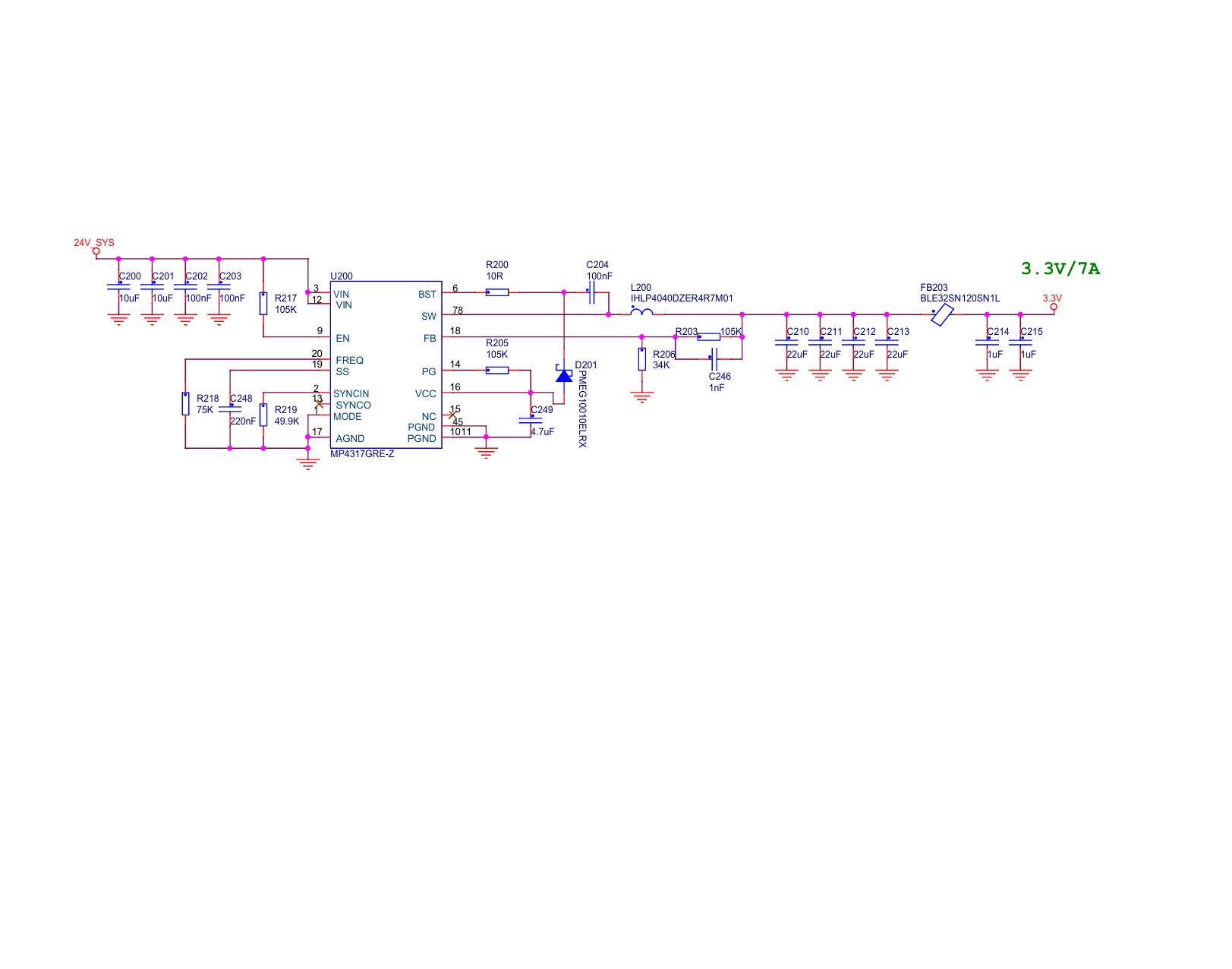
If you tried replicating this where there is no external bootstrap diode where MODE is pulled high to FCCM mode, does this behavior still persist? Have you verified the IC is damaged?
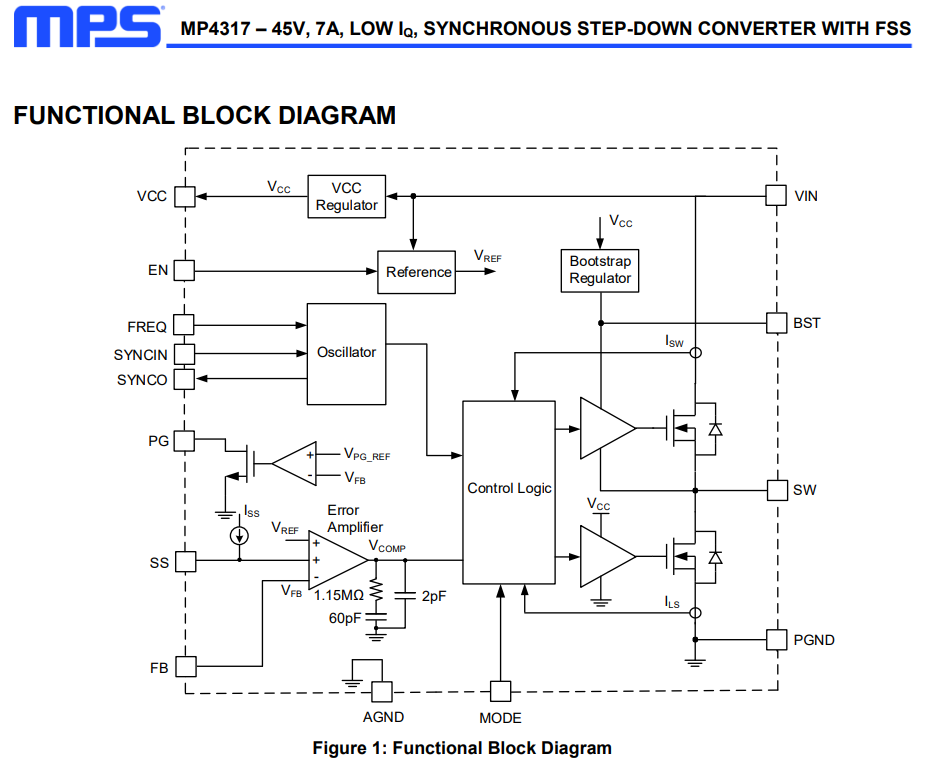
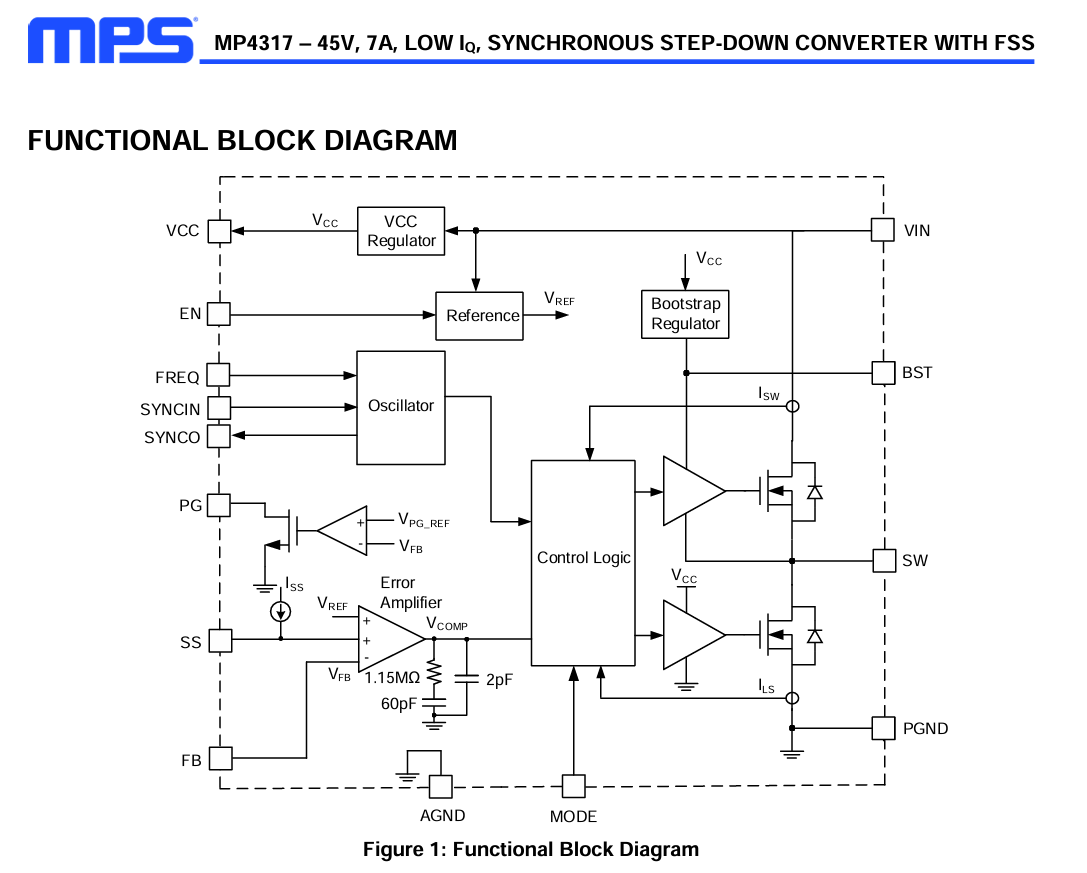
If you were to short the BST pin to the SW node, you would therefore be shorting VCC to GND when the LS FET turns on. This would likely result in shorted damage since VCC is responsible for supplying voltage to internal control circuit and gate drivers given a short caused by a microcrack resulted from thermal expansion.
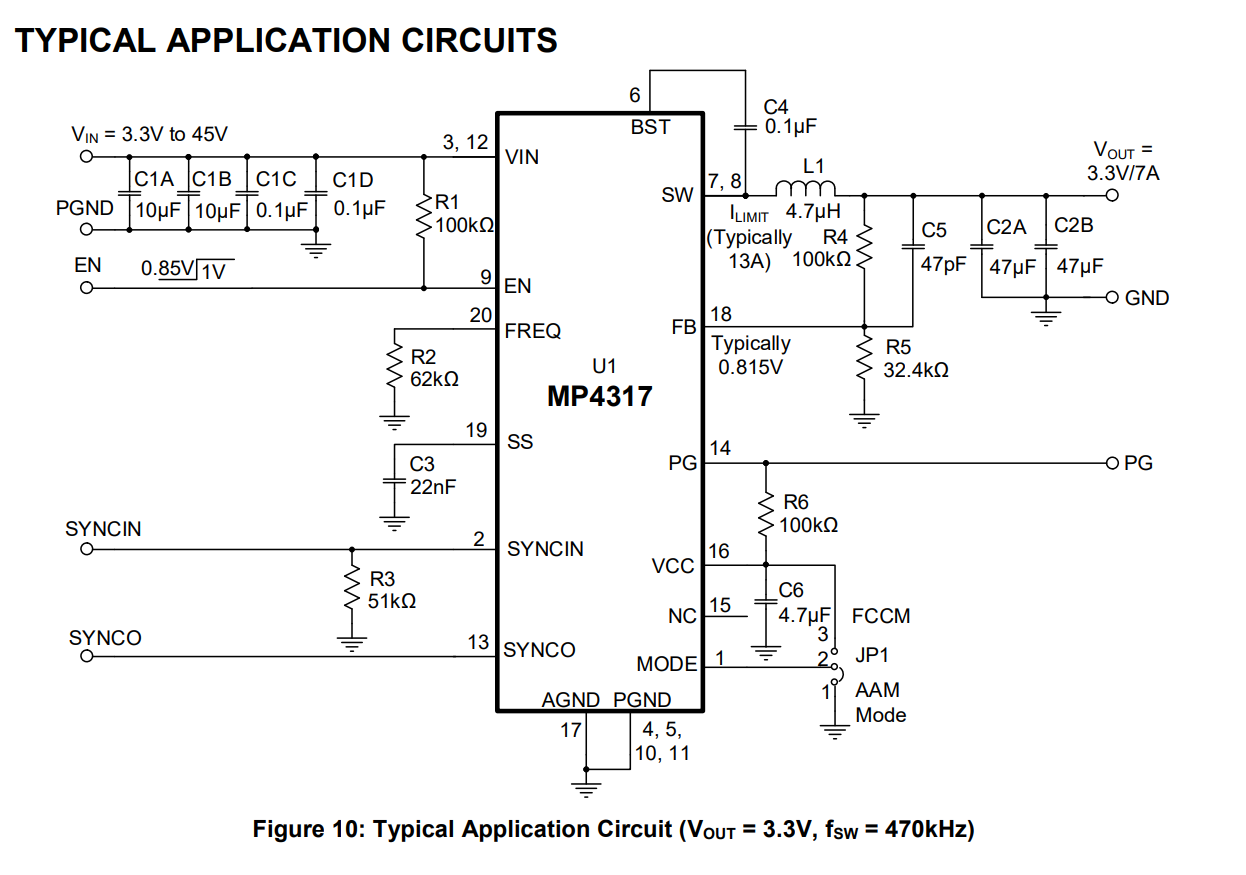
As for the feedforward capacitance (C246 for you, C5 on typical application schematic), this should not be an issue. You can optimize this by checking your transient response and ensuring your system is both fast and doesn’t ripple at the overshoot.
An interesting I forgot to say. I have 3 cases with short circuit C204.
If I short C204 too long, MP4317 will be damaged.
If I short C204 too quickly, MP4317 can automatic recovery.
If I short C204 right time, MP4317 will go stage: VCC=5V, PG = 0V, SW = 0V, BST = 0V, no hiccup. MP4317 can recovery as normal after turn off 24V input and turn on again.
I see, it seems in some cases the MP4317 recovers given this shorting and in other cases it damage incurs. Be sure in application that these pins are not shorted.
If I short circuit from VCC to GND or SS to GND, Vout ~ 0.5V while shorting, but will automatic recovery to 3.3V after remove shorting.
If I short BST to SW enough time, Vout ~ 0V, cannot automatic recovery to 3.3V after remove shorting. But while Vout ~ 0V, if I short circuit BST to GND enough time, 3.3V automatic recovery.
Shorting VCC to GND and SS to GND forces the buck to a safe shutdown state as switching stops, protecting the FETs. When you remove the short the IC can safely restart.
As you can see through the functional block diagram, the BST pin is strictly connected to the internal high side gate driver where the SW node is connected to the inductor. When you short BST with the SW pin, you bypass the high side FET entirely.
So, when the high-side FET turns on, the gate driver provides all the current it can directly into the SW node, which can cause an overcurrent event. Doing this can damage the internal gate drive circuitry.