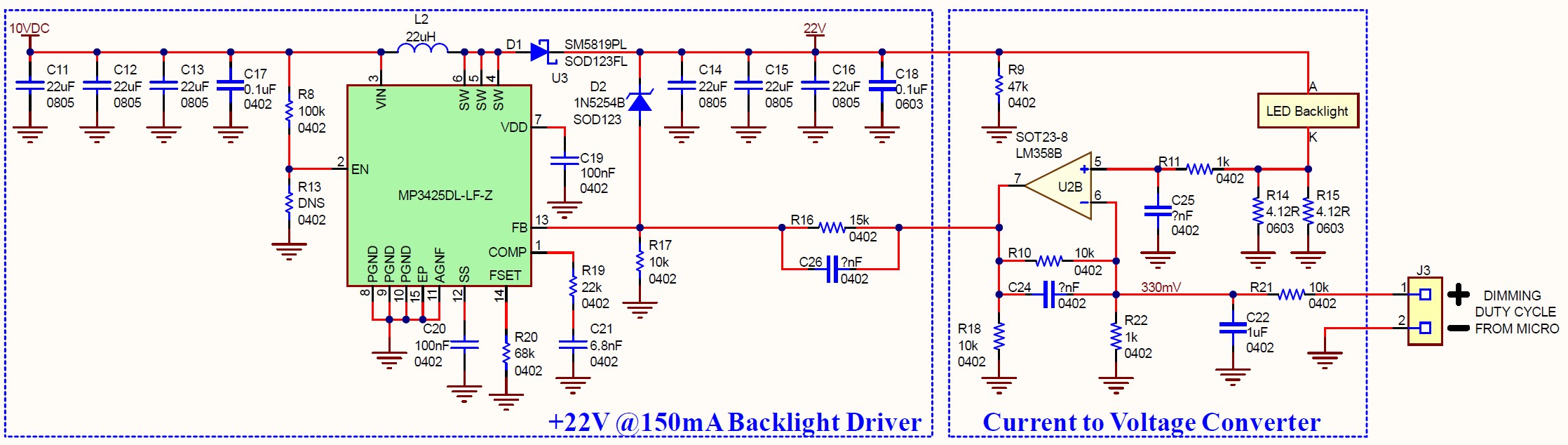
I’m designing a constant current LCD backlight driver using MP3425.
The LCD’s backlight is a series-connected string of white LEDs whose total string voltage is approximately 21VDC at 150mADC. The MP3425 buck converter is powered by a +10VDC constant voltage power supply.
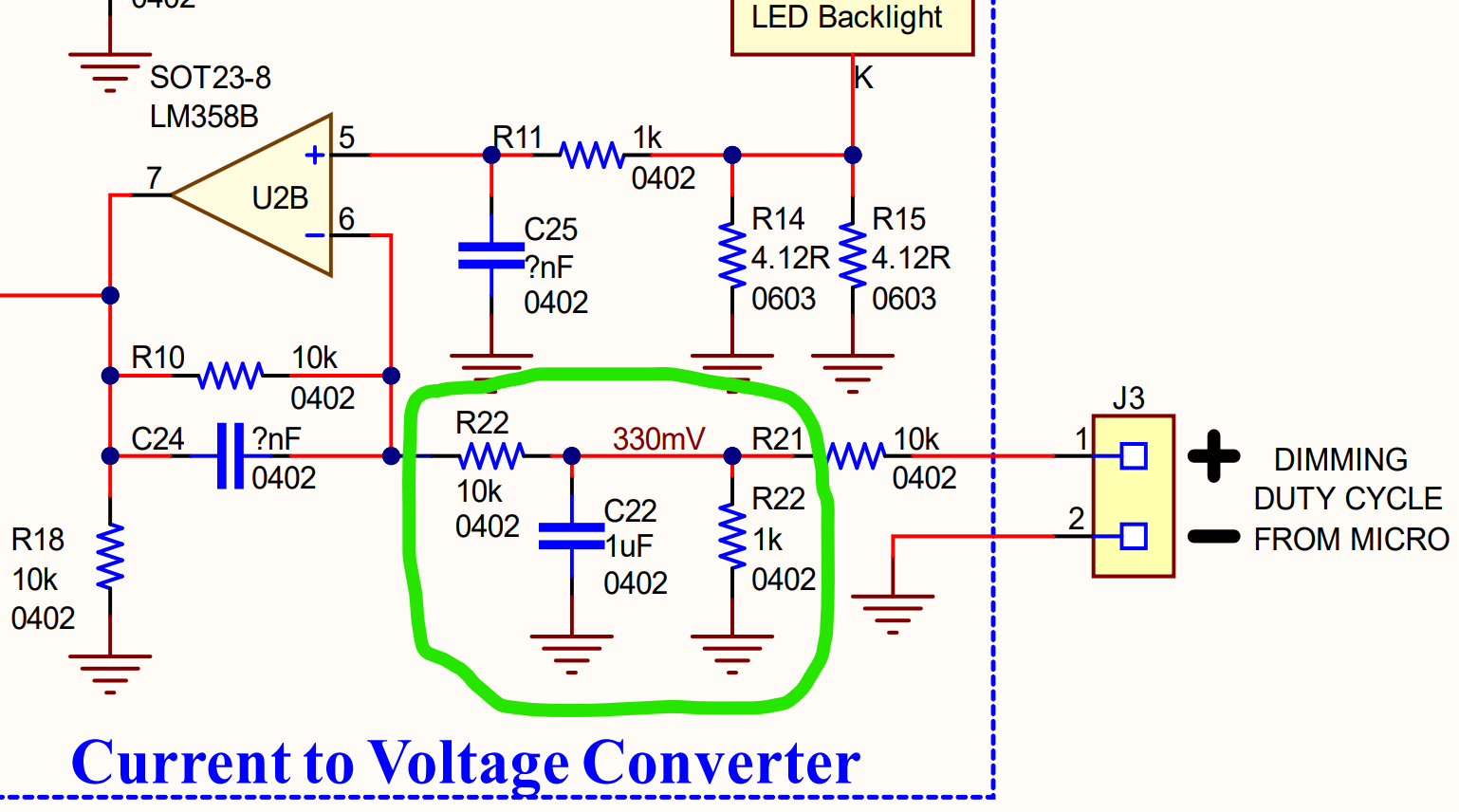
I use a 2.2 ohm LED current sense resistor. 150mA of LED current develops a 300mV signal across it. An LM358B op amp scales the sensed LED current and applies it to pin#13=FB of the MP3425 through a 15k resistor.
Using feedback resistors I can control the gain of the LM358B stage that creates a current-to-voltage converter.
There’s also a 0-300mV PWM’ed dimming signal from a microcontroller that is summed into the LM358 op amp circuit via its minus input pin to control the LED brightness.
Bottom line is that my constant current LED driver mostly works as it should. The LED current follows the PWM dimming signal. Zero dimming voltage across R22 gives very low LED current. Filtered dimming signal of 300mV gives about 150mA of LED current.
Life should be good at this point and I’m inching toward launching the design to production…
HOWEVER…. (and the reason I’m posting this) my design is not loop stable. The control loop around the MP3425 breaks into oscillation. I can tweak the gain around the LM358B loop control op amp and either improve the loop stability or worsen it.
At its best, the control loop gets into a marginally stable mode where the LED backlight exhibits a shallow brightness flutter around the current dictated by the dimming signal. The flutter is instability, not unfiltered PWM signal.
Are there any MPS-authored design tools that would help me resolve my stability problem? The loop’s settling time in response to changes on the dimming signal can be very slow (hundreds of msec) and I’d still be a happy camper.
I have attached the schematic to this posting. The capacitors whose values are shown as ?nF are CYA capacitors that I might use in the future to stabilize the loop. These caps are presently unpopulated.
Thank you for posting your question in the MPS Technical Forum.
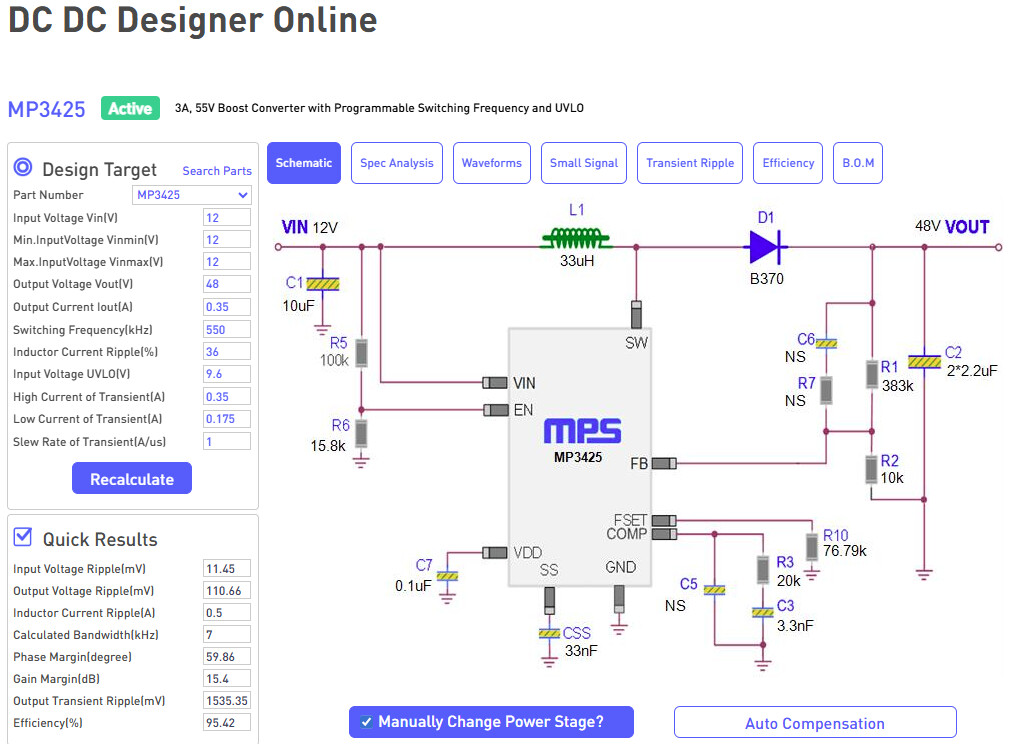
In our website you can find online design tools (link provided) such as MPS Smart and DC/DC Designer, which can be helpful for investigating DCDC converter behavior such as Stability.
**
MPS Smart:** Simulation software tool helpful for evaluating steady-state, transient, and stability performance of our MPS ICs.
The software is available for downloading in our website as well.
2) DC/DC Designer: This is a quick check tool for designing DC/DC converter based on your electrical specifications. This online tool provides a complete analysis of converter performance, including ripple, efficiency, BOM, PCB area, load transient, or frequency analysis.
Thanks for the fast response, Edgar. FWIW, I notice these additional things about my brightness flutter:
The flutter seems to have randomness to it rather than being a constant low frequency oscillation. The LED current is “burbling” like a boiling coffee pot with pulsation at a couple of blips per second.
An oscilloscope attached to the current sense resistor shows that the brightness flutter is caused by fast (few milliseconds) reductions of LED current of random depth.
The LED brightness flutter is more noticeable at low (~20mA) LED current. At 150mA the brightness flutter is largely unnoticeable.
If I reduce MP3425’s output capacitance (C14-C16) by removing one or more of these 22uF caps the flutter is diminished.
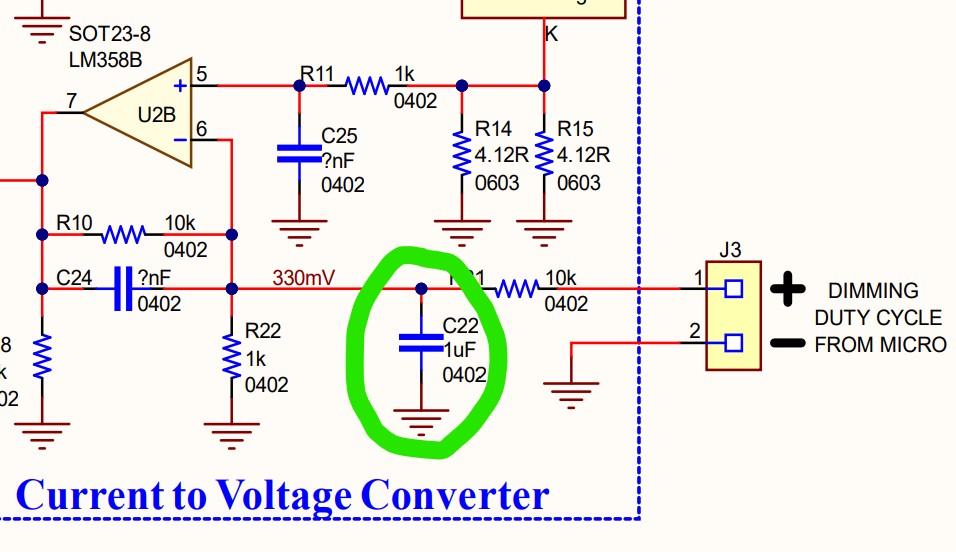
Edgar, the leisurely drive home tonight on crowded Indianapolis freeways gave me time to think about my circuit. The culprit causing instability is likely C22 in my current-to-voltage converter:
I placed this capacitor in my design to filter out ripple on the PWM dimming signal coming from the microcontroller. C22 does that job very well, but it also causes the gain of U2B op amp to be extremely high at high frequencies.
I suspect the circuit below would have been a better configuration for the op amp. I’ll verify that tomorrow and report the result.
Does anyone know if any MPSmart library has a simulation model for MP3425?
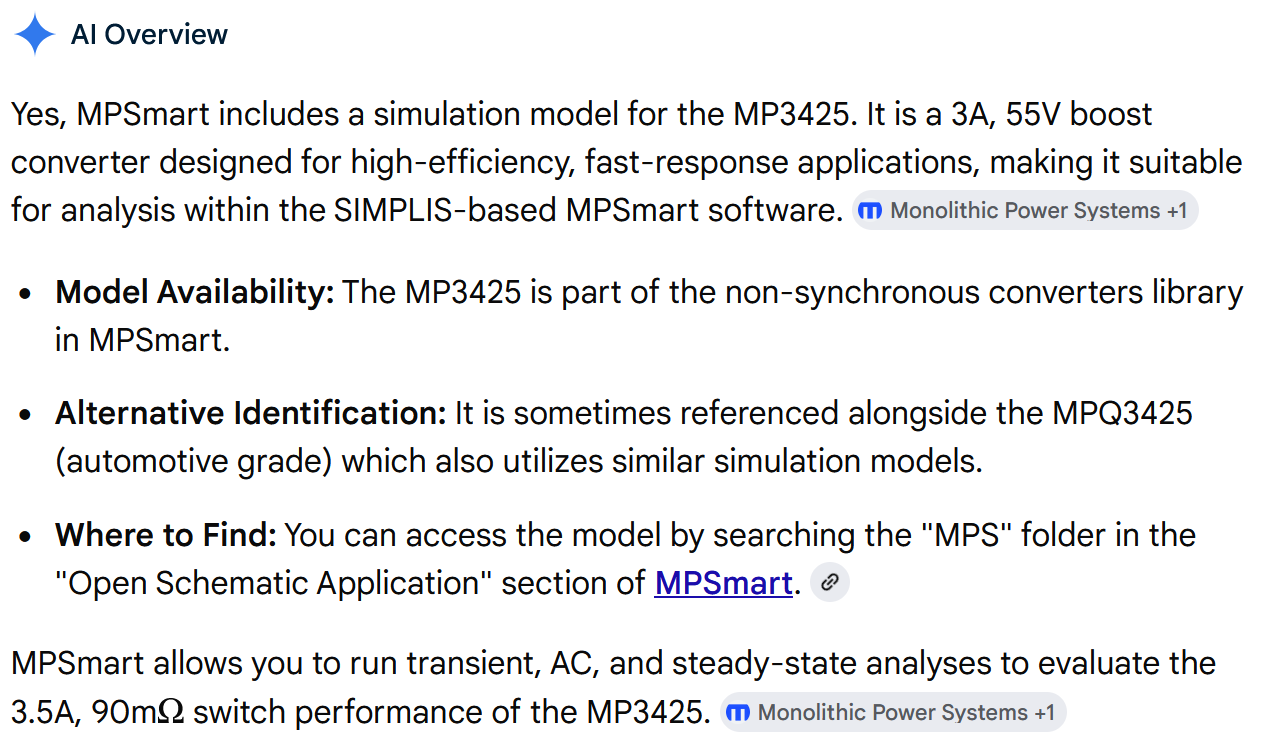
AI believes it does, but I cannot find it. I see no “non-synchronous converters library”. When I open the up search in MPSmart to look at all parts in the simulator’s database, I also see none.
To address your question about the simulation model for MP3425.
When you open the MPSmart application, there is a folder named SIMPLIS.
Inside this SIMPLIS folder, there will be another folder named MPS.
The MP3425 simulation model should be inside this folder.
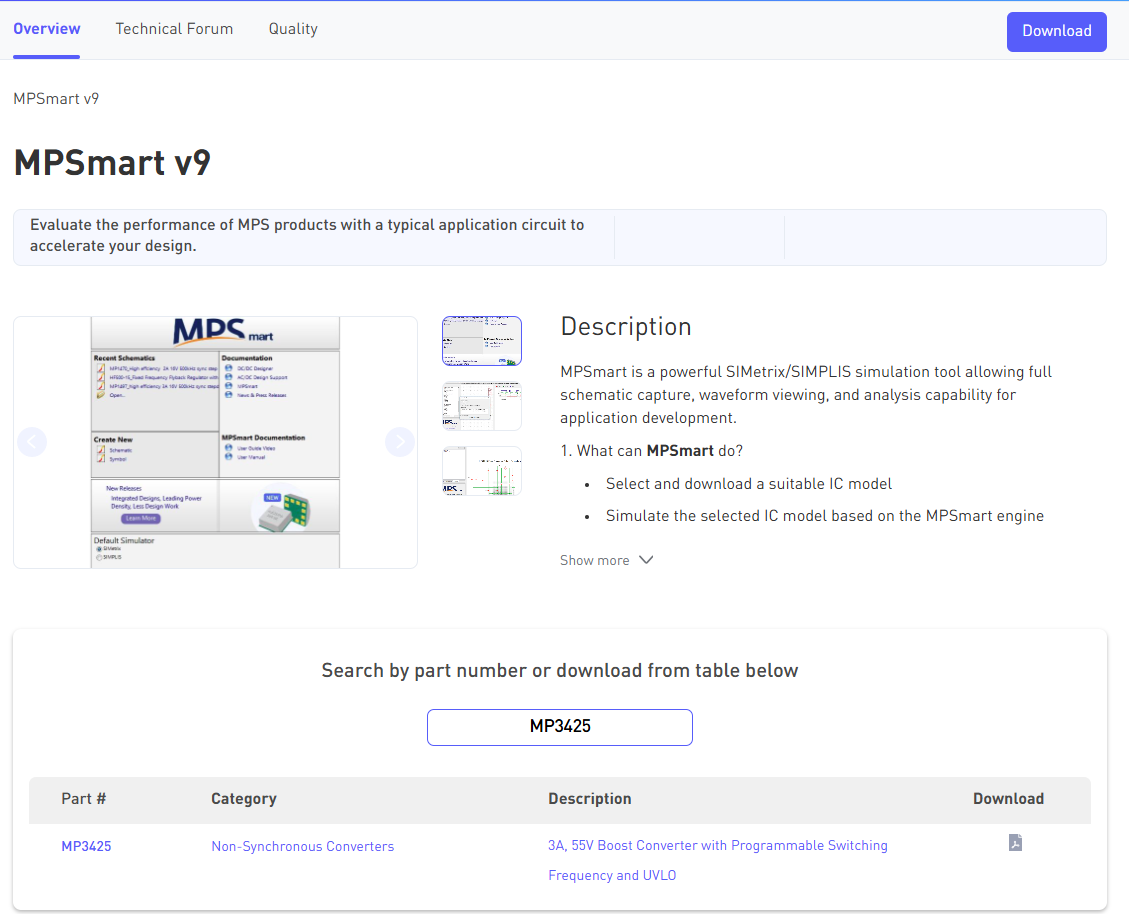
If are still having troubles finding it, then you can also download the simulation model from our Website.
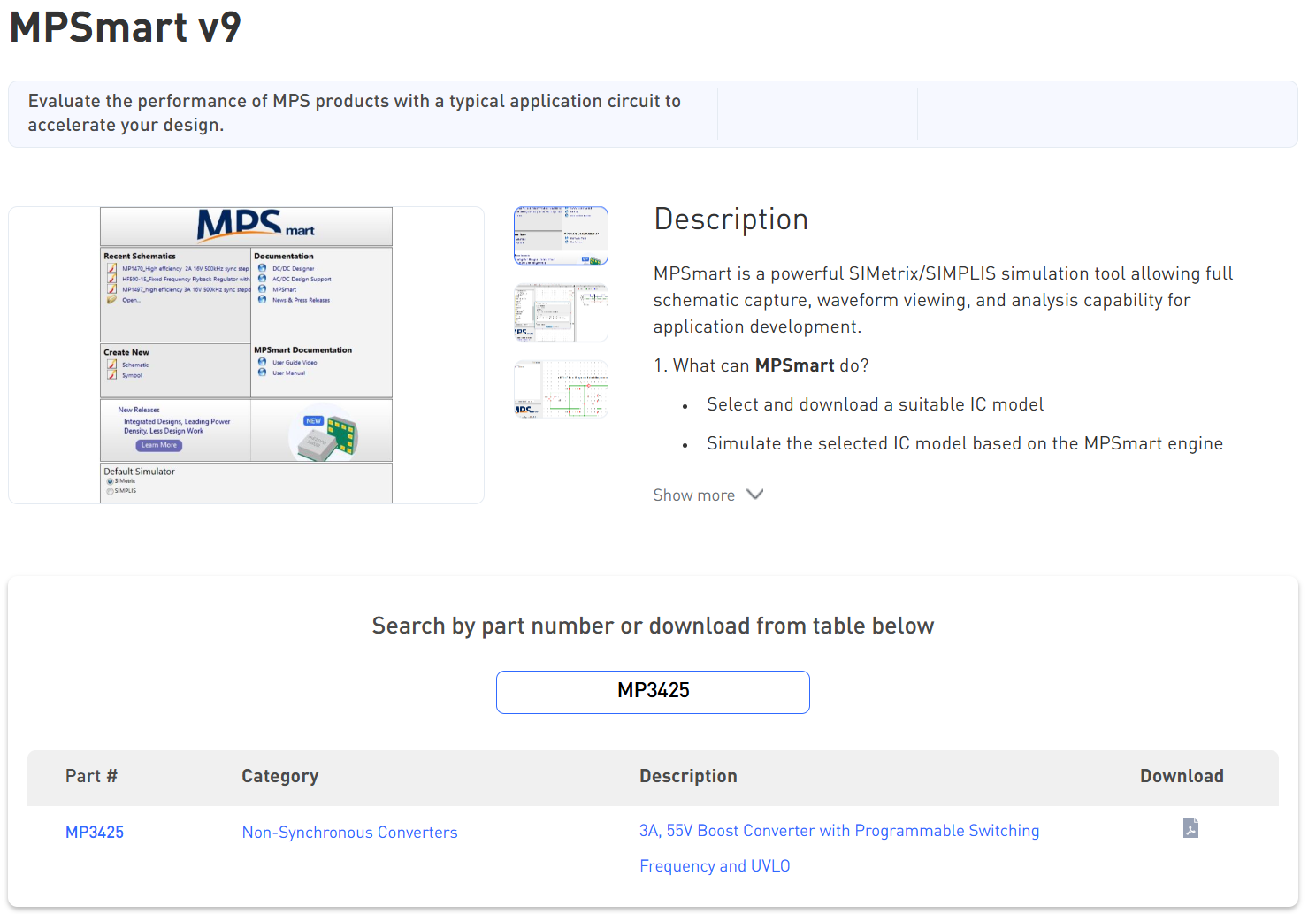
When navigating the MPSmart section of the design tools, you can find a search bar where you can type in the name of the part “MP3425.”
The part number with the simulation model for downloading will then show up.
(Refer to the below image for reference)