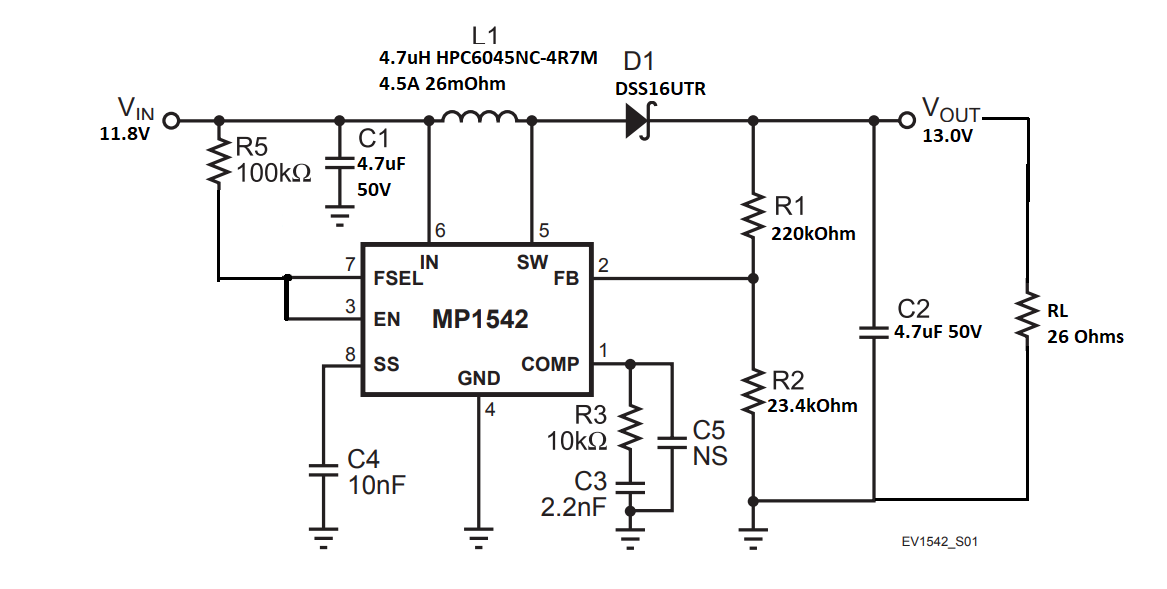
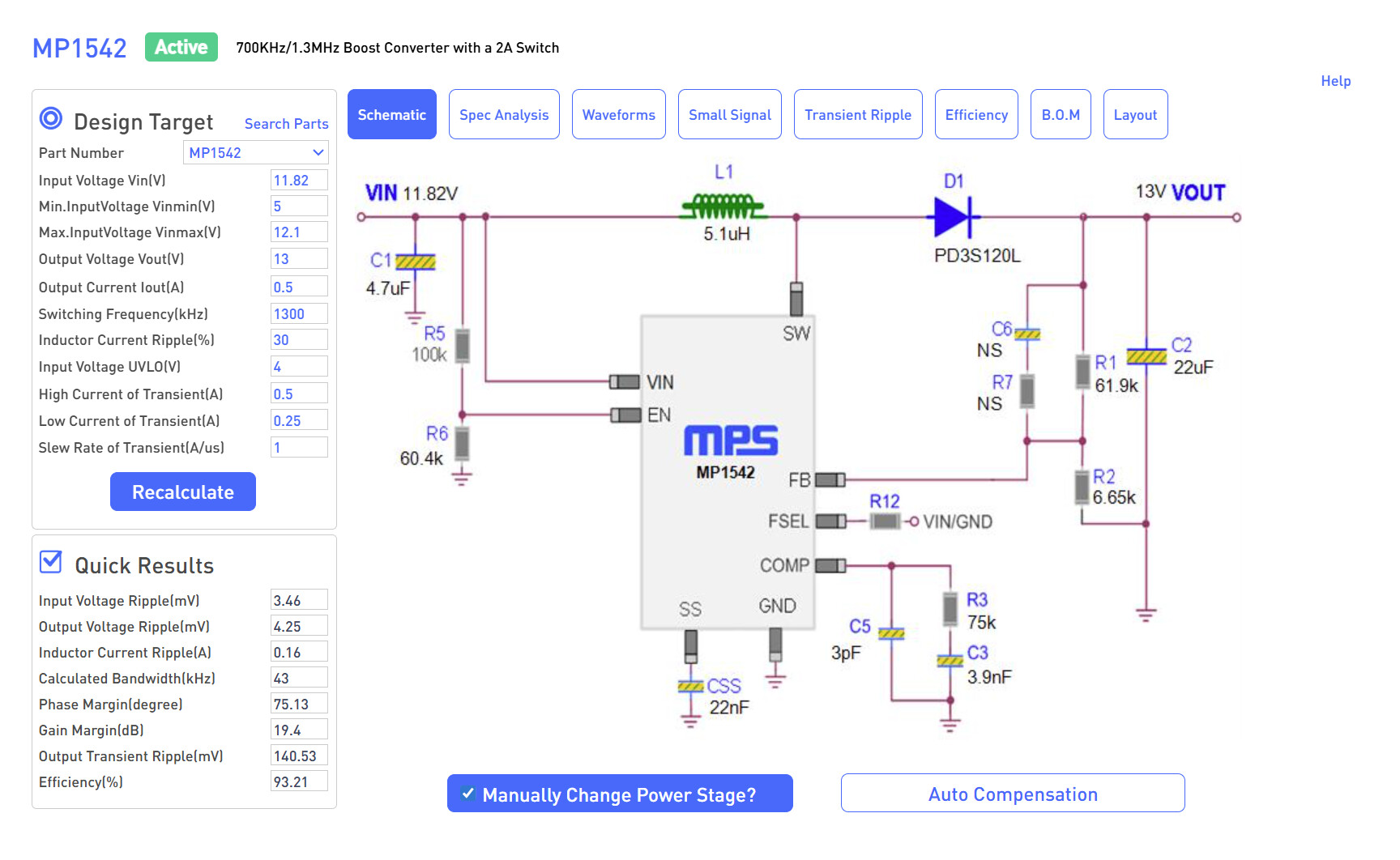
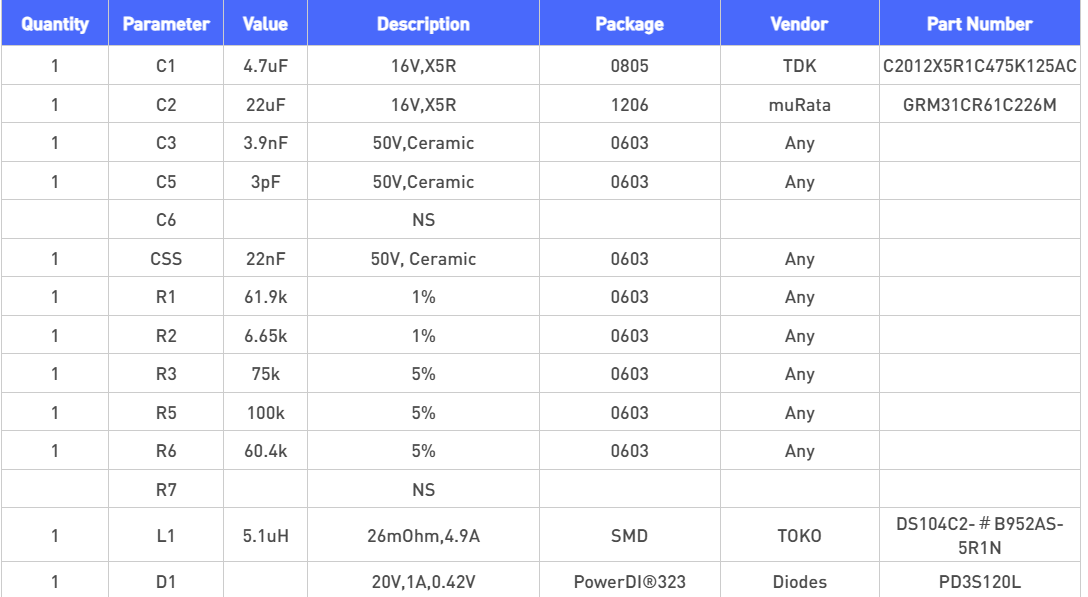
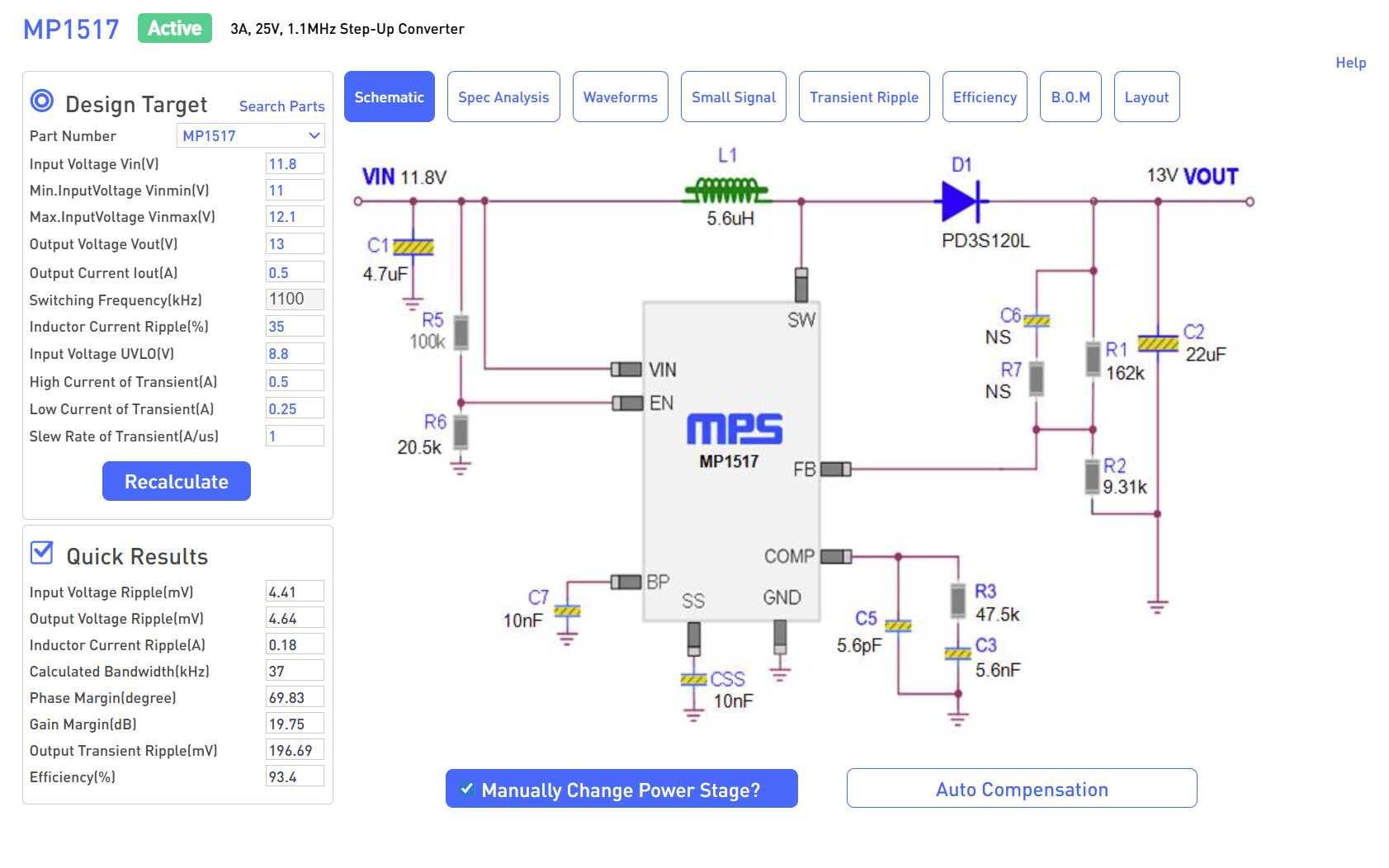
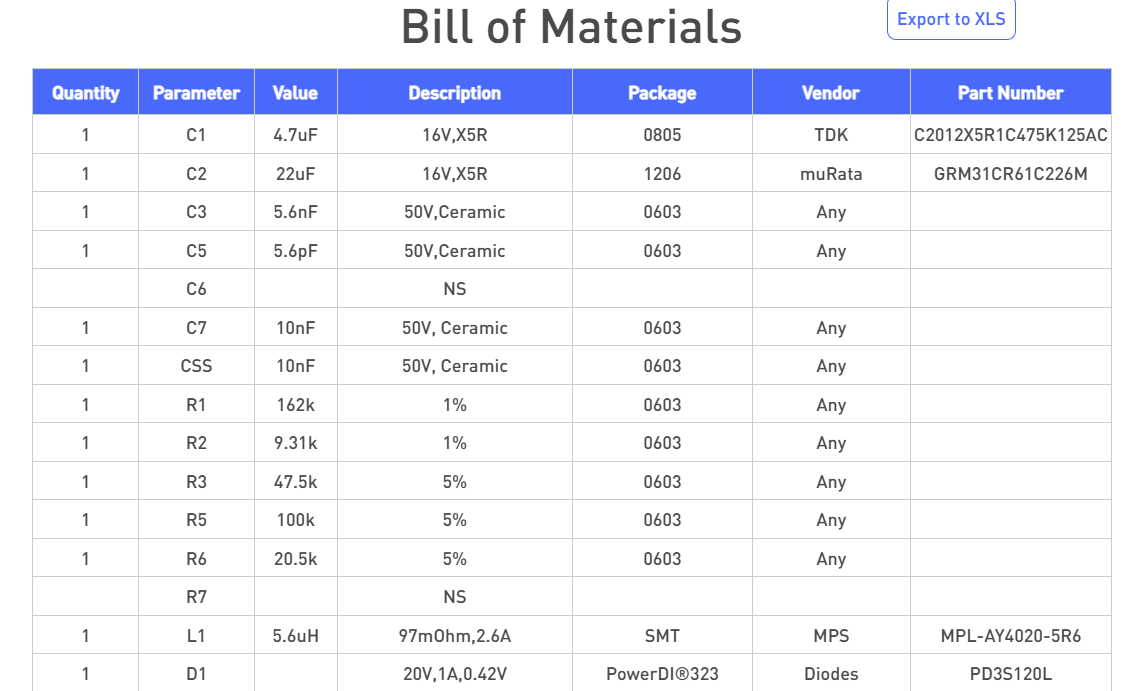
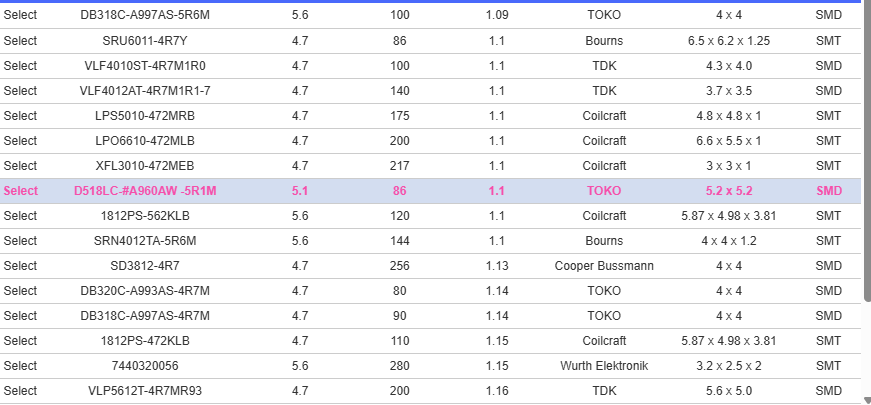
Hi Adhish, I tried the component network values recommended in the first screen capture (5.1uH, 22uF Cout, 75kOhm/3.9nF COMP), and the control loop was now unstable for any load current when input voltage was above 11.3V: and output voltage and COMP both exhibited sinusoidal oscillations. This is much worse than the problem I originally had, where the output was clean for most input voltages and load currents, and only exhibited operating frequency jump issues at particular light load operating points.
I think it’s clear that this isn’t dynamic instability (see additional work below). Would it be possible to get some feedback from MPS Design Engineering team on this issue? Is it possible that the part just isn’t appropriate for use at low switch duty cycles (10%)/low boost ratios(Vout/Vin=1.1), in a way that isn’t captured by either the datasheet or the Designer tool? Would the design team have any further recommendation for how to make the part transition in and out of light load reduced frequency operation at these low boost ratios without hysteresis-driven operating frequency oscillation?
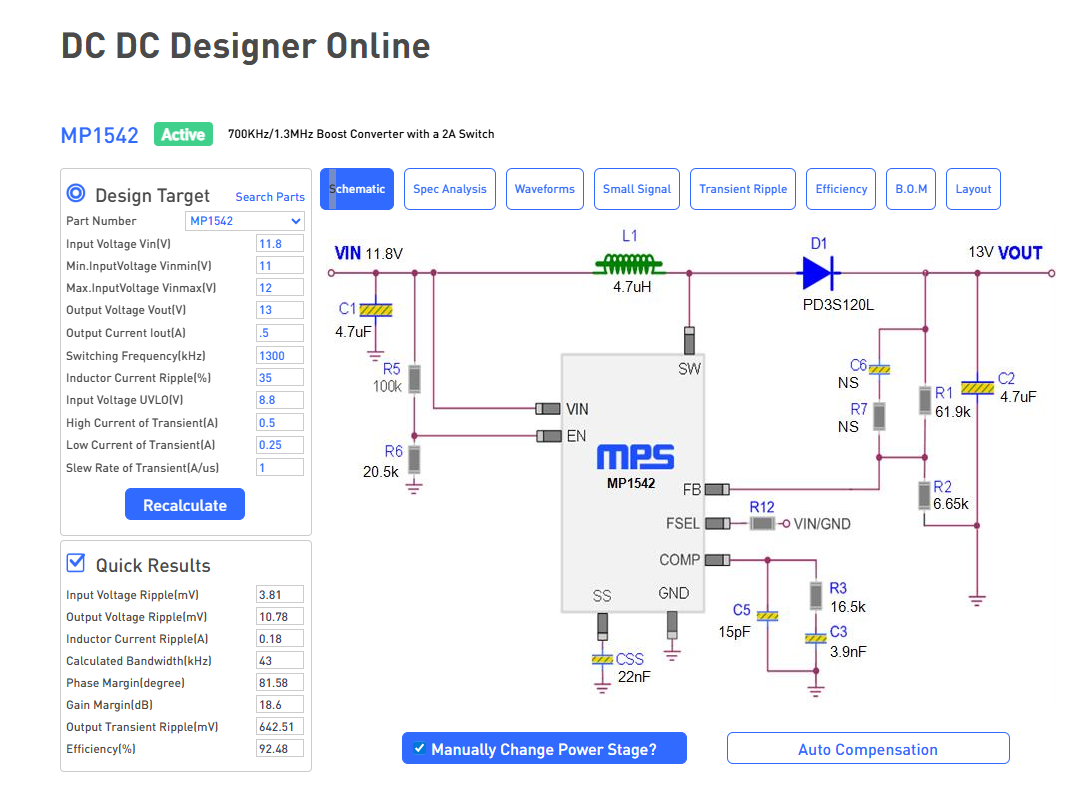
Some further work: by changing the Designer tool ripple allowance from the default of 30% to 35% the Designer now recommends a 4.7uH inductor. The app note says ripple up to 40% is typical (“Inductor Selection”, page 4) so 35% should be fine. I can also change the modeled output capacitor manually to 4.7uH to be in line with the datasheet table, and use Designer “Auto Compensation”, and I get phase margin of 81 deg and gain margin of 18dB with a recommended 16.5k/3.9nF COMP pin network. All indications are that this should be a stable operating point.
Placing 4.7uH, 4.7uF Cout, 16.5k/3.9nF COMP in the actual circuit results in clean operation for most load currents and most input voltages just as before, but still exhibits operating frequency jumps and triangular output ripple at specific low load current operating points, just as with the original 10k/2.2nF COMP parts.
So we’re now exactly following a set of Designer tool recommendations and have stable control loop operation, but this didn’t fix the issue. We’re still left with the original issue: the loop is stable, but at some particular light loads and input voltages, the part repeatedly jumps frequency, causing output ripple. At currents either above or below these points, and at input voltages above or below these points, the part’s output is stable and clean.
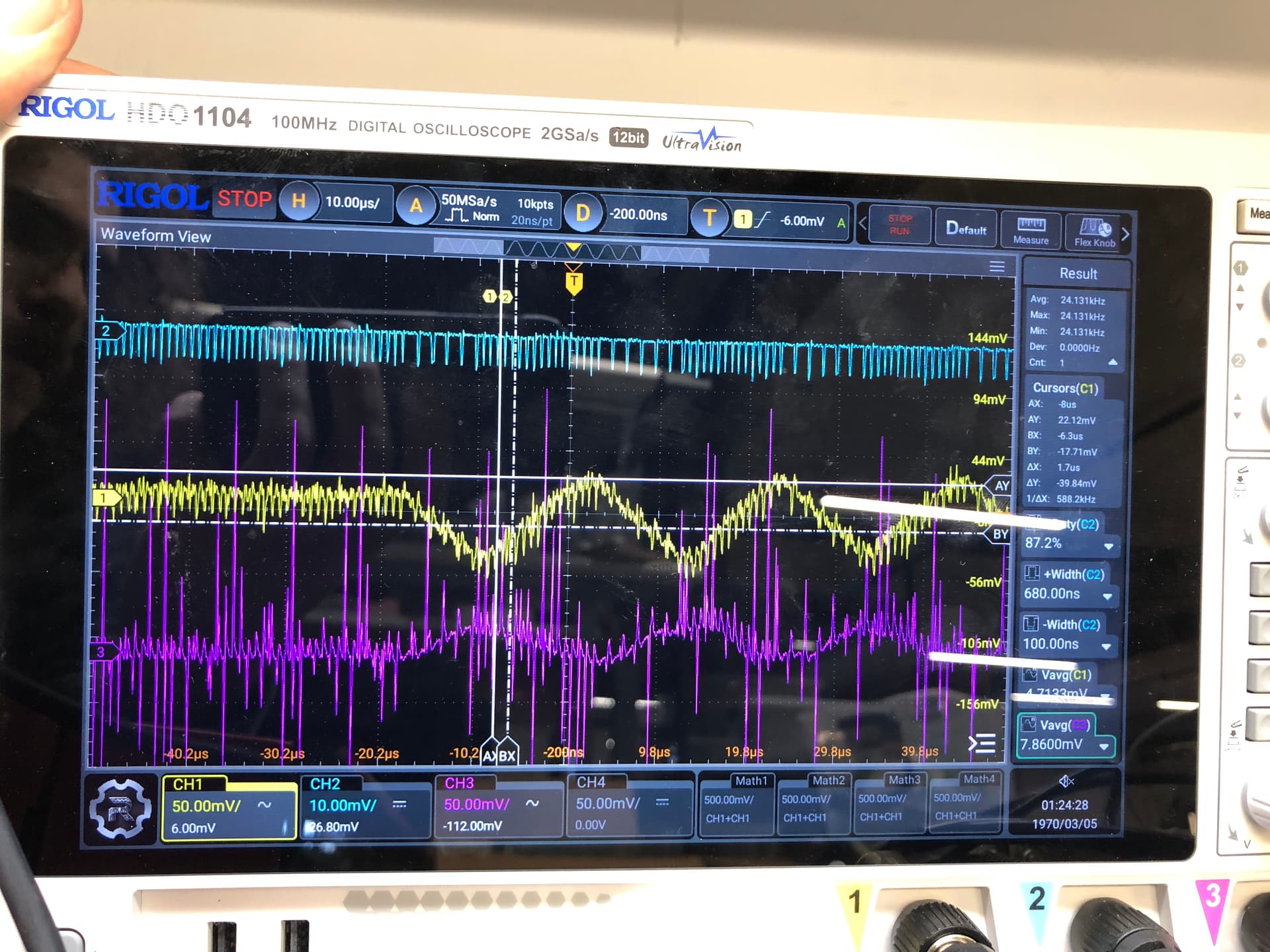
How can I say the loop is dynamically stable if there is an output ripple? I’ll include the following scope shot. This I think proves that what we’re seeing is not control loop instability related to the COMP pin network frequency response, but is caused by mode jumping between light load reduced frequency operating modes. I have finely adjusted the operating point (11.833Vin, 13Vout/0.35A resistive load) to the edge of a problem region so that the part jumps in and out of misbehavior randomly on it’s own, so we can see it starting to misbehave. This is with 4.7uF Cout, 16kOhm/3.9nF COMP. I can also get this to happen with all otherwise stable COMP/Cout values tested (22uF Cout, 5.1uH, 10k/2.2nF COMP; also 4.7uF Cout, 4.7uH, 10k/2.2nF COMP) by fine-tuning to slightly different input V and load I.
We have output voltage (yellow, AC coupled), switched node (blue, stray voltage pickup from a nearby probe) and COMP pin voltage (purple, AC coupled, sorry for the poor COMP probe grounding). The COMP pin DC voltage is 0.794V.
The feature I want to point out here is that COMP is perfectly flat aside from the probe grounding related spikes, and then the first thing that happens is that the switching frequency changes, and then the output voltage responds, and then finally the comp pin of course reflects the output via the feedback network. I think this shows that the output ripple and frequency variation is not caused by the comp network producing dynamic instability, but by the part transitioning between different light load reduced operating frequency modes back and forth, in a relaxation oscillation manner rather than in a dynamically unstable manner.
I’ll note that this happens regardless of whether I’m probing the COMP node or not, so this isn’t related to probe related noise injection (I am aware that the probe is definitely injecting some noise in the configuration shown above!).
Additionally the oscillation is triangular and begins instantly, and is not sinusoidal. This is indicative of an intentional operating frequency mode change due to hysteresis operating on some control variable (probably COMP pin voltage). This is not characteristic of dynamic instability, which would exhibit complex right half plane pole pair behavior (sinusoidal oscillation with exponential amplitude growth).
Anyway, thanks for your continued support on this, hoping we can figure out what’s going on here.